



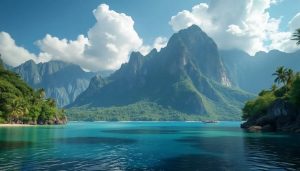
Picture tall palm trees leaning toward turquoise water, white sand beaches, and a lush green interior rising straight out of the ocean. That is Seychelles before you even land, an archipelago made up of 115 islands scattered across the Indian Ocean, most of them still fringed with untouched rainforest and granite boulders older than almost anywhere else on earth.
Fewer than 100,000 people live here, which is part of why Seychelles feels so different from a typical city break. The streets are quiet, the roads are rarely congested, and the crowds you do find are usually gathered on the beach rather than anywhere else. It is a country that leans heavily on tourism to survive, alongside its long standing tuna fishing industry, and the two together have shaped nearly everything about how the islands run.
Three official languages are spoken here: Seychellois Creole, which most locals speak natively day to day, alongside English and French, both used in government, business, and education. Ethnically, the population traces back mainly to French colonial settlers and enslaved Africans and Malagasy people brought over from the 1770s onward, with later waves of Indian, Chinese, and Arab immigration folded into what is now a genuinely multiethnic Creole culture.
Seychelles is, in many ways, close to an ideal African travel destination. It is worth being honest about one thing though: the country is also dealing with the world’s highest rate of heroin dependency per capita, with close to 10% of the working age population affected. It is not something that will touch most travelers directly, but it is part of the country’s real story, not just its postcard image.
What Should Your Budget Look Like?
Seychelles is expensive, and it is worth saying that plainly before anything else. A hundred dollars worth of adventure that might stretch across two or three days in Cape Town, Nairobi, or Lagos can disappear here in about two hours.
Decent accommodation generally starts around $150 per night. If you are willing to share a place and cook your own food, you can bring that down to about $80 per night. Eating out adds up fast: budget around $80 for a buffet, $20 for a single cocktail, and $100 for a proper sit down lunch or dinner, and that is on the more affordable end of things.
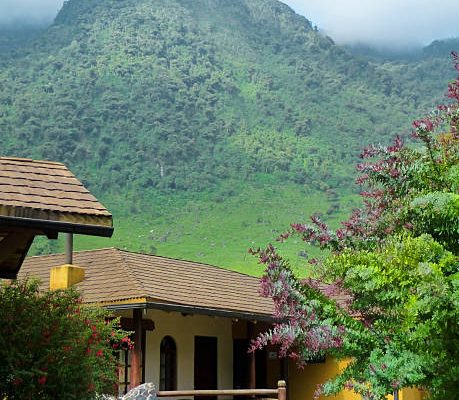
At the very top of the market, resort rooms tucked into the mountains with lush surrounding vegetation start at $2,000 to $3,000 a night. Seychelles genuinely offers something at every price point, but very little of it qualifies as cheap.
Where Can I Stay?
There is no Uber or ride hailing app here, and cars are privately owned rather than run as rentals in the way you might expect. Taxis and omnibus drivers are permitted to move people around, and a local transport company called LinkUp runs an app that can help with rides and errands across the main islands.
Renting a vehicle is the most flexible option if you want to explore beyond your resort, and driving the coastal roads, though occasionally hair raising, is genuinely one of the more memorable parts of visiting Seychelles.
On Mahe This is where most first time visitors base themselves, close to the capital, Victoria, with easy access to the island’s main attractions.
On Praslin The second largest island, home to quieter beaches and the Vallee de Mai forest reserve.
On La Digue A smaller, slower paced island reached by ferry, known for its bicycle only transport and some of the most photographed beaches in the world.
Ferries connect the three main islands regularly, so island hopping across a single trip is easy to plan.
What Can I Do?
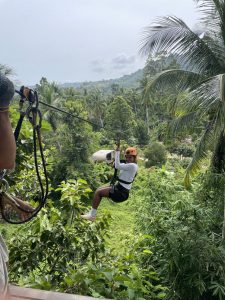
Zip line at Constance Ephelia, Mahe. This resort runs a course of eight zip lines ranging from 80 to 120 meters in length, set 20 to 24 meters above the forest canopy overlooking Port Launay. The full experience runs about an hour and a half. It is genuinely fun, though expect your head to be pleasantly throbbing by the eighth ride.

Tour the Takamaka Rum Distillery, Mahe. Set on a restored 1792 plantation estate, this is Seychelles’ only commercial rum distillery, and the guided tour walking you through the rum making process is free. A cocktail or tasting afterward will run you around 150 rupees. It is a small but genuine boost to the local economy, since the distillery still sources its sugar cane from local growers and supports jobs on the estate.
 photo: Tunde Oyebola
Visit Eden Island, near Victoria. About 3.5 kilometers from the capital, this is Seychelles at its most luxurious: a marina lined with superyachts, a hidden mall, and high end restaurants where dinner will run you around 500 rupees. Two bedroom apartments in the basin start around $600,000, climbing well past $3,000,000 for the largest villas. This is where you will find the country’s wealthiest residents alongside a large expatriate community, and it makes for some genuinely striking photos.
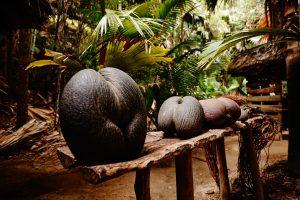
Explore the Vallee de Mai, Praslin. A UNESCO World Heritage Site nicknamed the Garden of Eden, this palm forest reserve is the only place on earth where coco de mer trees grow naturally. The fruit, sometimes called the sea coconut, is the largest and heaviest seed in the plant kingdom, weighing up to 25 kilograms. Its shape has made it a source of local legend for centuries, and it is protected by the government, so it is neither eaten nor casually taken off the island.
Cycle around La Digue. Bicycles and ox carts outnumber cars here, and renting one runs about 150 rupees a day, or closer to 600 rupees for an electric bike. The island is home to Anse Source d’Argent, widely considered one of the most photographed beaches in the world, along with free roaming giant Aldabra tortoises, clean fresh air, and calm, clear water that makes for excellent snorkeling and kayaking. Watching the sunset from the shore here is one of those quiet, unhurried moments the whole trip tends to build toward.
Go scuba diving. On Praslin, White Tip Divers, based at Cote d’Or next to the Paradise Sun Hotel, run PADI courses from complete beginner level through advanced certification. On La Digue, the Azurra Dive Centre is reachable by bike from anywhere on the island, with dives running roughly 45 to 70 euros, and Trek Divers in La Passe is a solid alternative with its own dive boat and full equipment.
What Currency Do They Use?
Seychelles uses its own currency, the Seychellois rupee (SCR), and hotels here in general run expensive regardless of which island you choose.
A Small Bonus for Travelers
The Seychelles passport is one of the strongest in Africa, which says something about how the country is regarded internationally despite its small size. And if a proposal happens to be somewhere on your itinerary, it is worth knowing that Seychelles has built its reputation on more than beaches alone: this is a place people travel to specifically to slow down and mark big moments, ring included or not.
Final Thoughts
Seychelles is not a destination you rush. It rewards travelers willing to pay for quiet, for space, and for water that genuinely looks unedited in every photo you take. Whether that means a quiet bike ride past giant tortoises on La Digue, a rum tasting on a two hundred year old estate on Mahe, or simply watching the sun go down over a beach that barely has anyone else on it, this is a country built for slowing all the way down.
By Odunayo Odedoyin

No Comment! Be the first one.